

PRP is most relevant when a clinician confirms pattern hair loss and finds miniaturised follicles that are still functioning. Sudden shedding, smooth bald patches and scarring require a different diagnostic path first. By the end, you will know which findings support PRP, which safety issues can delay it and what a realistic treatment decision involves.
Key takeaways
- PRP suits diagnosed pattern hair loss with miniaturised but living follicles.
- Check for thyroid disease, iron deficiency, alopecia areata and scalp inflammation first.
- Delay PRP when hair loss is sudden, unexplained or actively inflamed.
- Judge the plan by diagnosis, treatment intervals, photographs and measurable density changes.
Which hair-loss patterns make someone a stronger PRP candidate?
The strongest PRP candidates have clinically diagnosed androgenetic alopecia with reduced density, widening part lines or gradual recession, while trichoscopy shows miniaturised but surviving follicles. This includes both male-pattern hair loss and female-pattern hair loss.
| Pattern | What supports PRP | What changes the decision |
|---|---|---|
| Male-pattern hair loss | Miniaturised follicles in receding or thinning zones | Long-standing, completely bare areas are unlikely to respond |
| Female-pattern hair loss | Widening part line with preserved follicular openings | Check for iron deficiency, thyroid disease or another cause of diffuse shedding |
| Recent-onset shedding | A reason to investigate the trigger | Do not treat automatically before assessing illness, stress, weight loss, childbirth or medication effects |
| Shiny or scarred scalp | No reliable follicle activity | PRP cannot recreate follicles destroyed by scarring |
A practical PRP suitability checklist includes the diagnosis, degree of thinning, scalp condition, general health and treatment goal. Age alone does not decide eligibility; men and women of different ages may be considered when follicles remain active and the scalp is healthy.
PRP usually complements topical minoxidil and, when medically appropriate, oral or topical antiandrogens. It is not a guaranteed stand-alone cure. Set a realistic goal such as less shedding or improved density, not complete restoration of a shiny bald area. A clinician should confirm the diagnosis before injections, especially when loss is rapid, patchy or unexplained.
Which diagnoses must be checked before choosing PRP?
Hair-loss diagnosis before PRP starts with the scalp, not the injection. A clinician examines density, redness, scale, tenderness and follicular openings, reviews the hair-pull history, uses trichoscopy to identify miniaturised or damaged follicles, and takes baseline photographs for comparison.
| Pattern or finding | Clue | Why it changes the decision |
|---|---|---|
| Androgenetic alopecia | Gradual thinning, widening part or receding hairline; miniaturised follicles remain | The clearest PRP evidence applies here |
| Telogen effluvium | Diffuse shedding after illness, major stress, weight loss, childbirth or another trigger | Treat the trigger and correct deficiencies first |
| Alopecia areata | Discrete smooth patches caused by an autoimmune process | PRP evidence is less established than for pattern loss |
| Traction alopecia | Loss along areas exposed to repeated tight braids, extensions or ponytails | Stop tension and assess whether follicles remain viable |
| Scarring alopecia | Inflammation, scale, redness or missing follicular openings | Control the disease; destroyed follicles cannot be restored by PRP |
Blood tests are chosen from the history and examination, not ordered automatically. A complete blood count, ferritin and thyroid testing can uncover anemia, iron deficiency or thyroid disease; nutritional problems and medication effects can also cause diffuse shedding.
Rapidly progressive, diffuse or patchy loss needs investigation before injections. Active inflammatory or scarring disease requires specialist treatment, and an uncertain diagnosis may require a scalp biopsy. Treating all shedding as one condition risks delaying the therapy that addresses alopecia areata, telogen effluvium or another underlying cause.
When is PRP unsafe, premature or a poor fit?
A shiny, scarred scalp with absent follicular openings signals scarring alopecia: permanent follicle destruction that PRP cannot reverse. A completely inactive bald area is also a poor target because injections cannot create new follicles. Untreated scalp infection, active inflammatory disease, rapidly worsening unexplained loss or hair loss without a diagnosis must be addressed first.
Before treatment, the practitioner should complete these PRP contraindications and safety checks:
- Review thrombocytopenia, platelet-function disorders, significant anemia, bleeding disorders, uncontrolled systemic illness and recent infection. You also need enough blood and functional platelets for the planned preparation.
- Disclose aspirin, clopidogrel, warfarin, a direct oral anticoagulant or any other medicine that affects clotting. Blood thinners and PRP require coordination between the prescribing clinician and PRP practitioner; never stop one independently to improve the result.
- Discuss fainting, needle intolerance and previous reactions to injections. These issues may require different precautions or make another approach more suitable.
Pregnancy and breastfeeding are usually reasons to defer an elective cosmetic scalp procedure because safety evidence is limited. That does not mean PRP has been proven to harm pregnancy. After childbirth, distinguish postpartum telogen shedding from pattern hair loss before injecting.
These factors do not automatically exclude every patient, but they determine whether treatment should wait, change or be replaced.
What happens during the assessment and PRP appointment?
A PRP consultation should establish why you are shedding and whether treatment is safe before any injection. Bring a list of medicines and supplements, allergies, previous hair-loss treatments and relevant medical records.
1. The clinician will ask when shedding began, how quickly it is progressing, and whether relatives have pattern hair loss. Report childbirth, recent fever or surgery, diet or weight change, scalp itching or pain, medicines, supplements, allergies and any bleeding history.
2. Examination can include scalp inspection, a hair-pull assessment, trichoscopy for hair loss and standardised photographs. Blood tests such as a complete blood count, ferritin and thyroid testing are ordered when your history suggests anemia, iron deficiency, thyroid disease or another systemic cause.
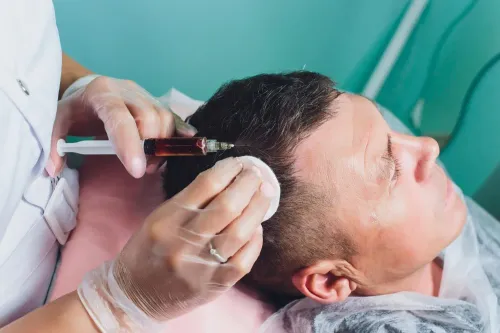
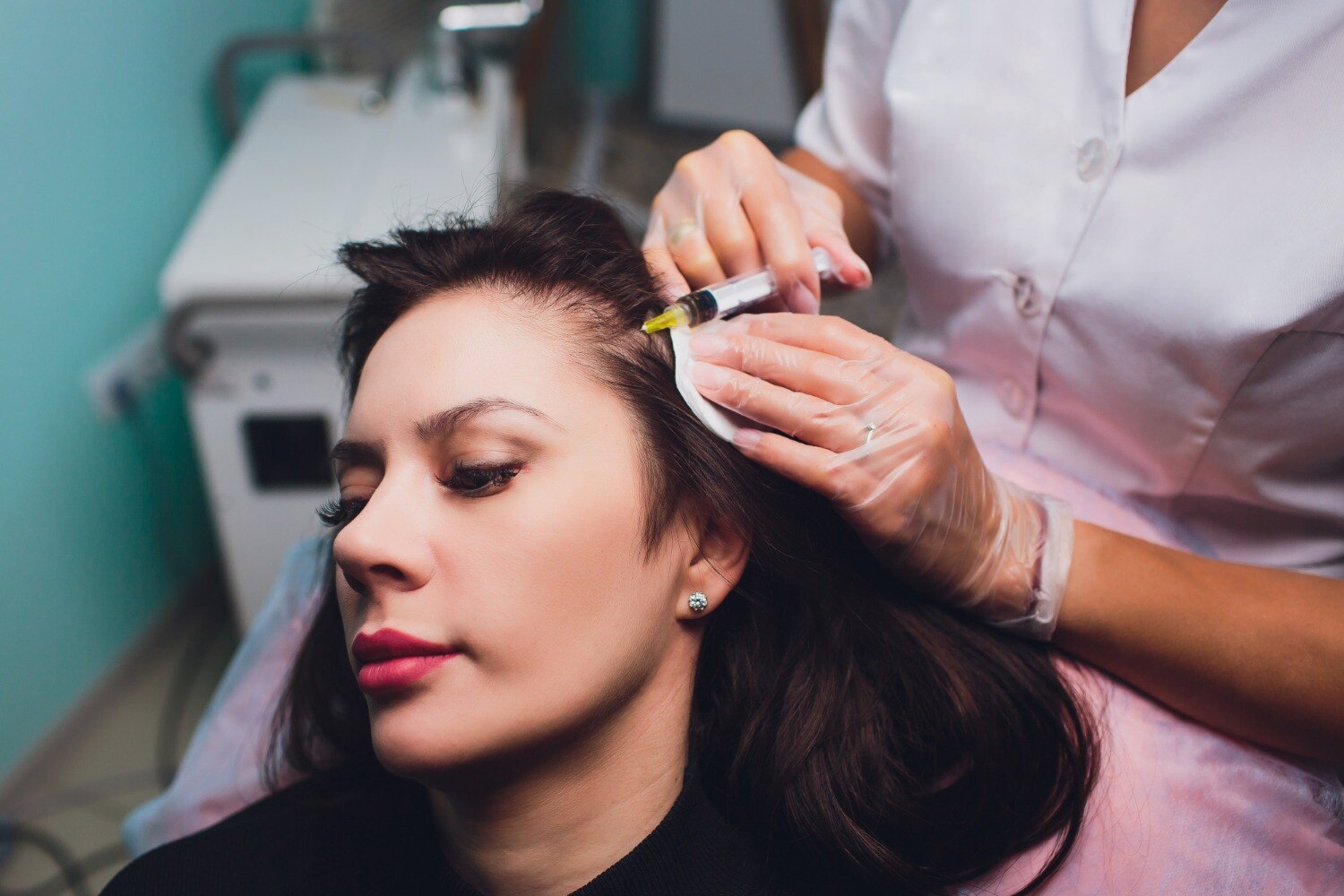
3. During PRP blood collection, blood is drawn, processed in a centrifuge and prepared for scalp injections. Ask whether leukocytes are retained, how the preparation is activated, and where injections will be placed; PRP protocols are not standardised, so one clinic’s preparation cannot be assumed to match another’s.
4. Confirm topical or local anaesthetic options, expected pain, bruising and swelling, infection risk, and precautions for fainting. Ask for written PRP aftercare covering scalp washing, exercise, heat, hair products and medicines.
Skinzone Clinic-Skin, Hair & Aesthetic Clinic Pune can be considered when you want the diagnosis, safety screen and preparation details discussed before treatment is chosen.
Related service
PRP & GFC Therapy for Hair Growth in Bibwewadi, Kondhwa, Swargate, Pune, PCMC Are you struggling with hair thinning, hair loss, or reduced hair volume? At Skinzone Clinic, Pune, led by Dr. View service → |
How should you judge a PRP treatment plan and its results?
About three PRP treatment sessions spaced roughly one month apart is a common study pattern, followed by assessment over the next several months and possible PRP maintenance. It is not a universal prescription.
Platelet concentration, leukocyte content, activation method, injection depth, volume and spacing differ between clinics and studies, so ask the clinician to state the planned sessions, review points, maintenance approach and alternatives.
| Stage | What to assess | What can mislead you |
|---|---|---|
| Immediately after injection | Pain, swelling, tenderness and scalp recovery | Swelling or short-term shedding can hide the baseline |
| During the PRP results timeline | Standardised photographs, hair-density measurements and daily shedding | Casual mirror checks and different lighting |
| After the planned series | Reduced shedding or greater density in viable follicles | Expecting new follicles in a scarred or completely bald area |
Do not judge the result immediately after an injection. Compare photographs taken with the same angle, lighting and hair position at agreed review intervals, alongside consistent density measurements and changes in shedding. Response is not guaranteed, and PRP cannot restore follicles destroyed by scarring.
A sound plan explains how minoxidil and PRP will be used together, or whether an appropriate topical or oral antiandrogen is indicated. Evidence supports PRP mainly as an adjunct to diagnosis-based treatment, not as a guaranteed stand-alone cure. Reassess the diagnosis and treatment strategy if agreed review points show no meaningful change.
Frequently asked questions
Which hair-loss patterns make someone a stronger PRP candidate?
People with clinically diagnosed androgenetic alopecia, including male-pattern or female-pattern hair loss, are stronger candidates when trichoscopy shows miniaturised but surviving follicles. Reduced density, a widening part line or gradual recession can fit this pattern.
Which diagnoses must be checked before choosing PRP?
A clinician should check whether hair loss is caused by conditions such as alopecia areata, telogen effluvium, thyroid disease, iron deficiency, nutritional deficiency, medication effects or inflammatory scalp disease. The diagnosis determines whether PRP is appropriate.
When is PRP unsafe, premature or a poor fit?
PRP is a poor starting point for sudden or unexplained shedding, untreated scalp infection or inflammation, scarring alopecia, or complete loss of follicle openings. Delay treatment until the cause is assessed and active disease is managed.
What happens during the assessment and PRP appointment?
The assessment includes a medical and hair-loss history, scalp examination and trichoscopy. The clinician may request blood tests when the history or examination suggests an underlying condition. During PRP, blood is drawn, processed, and the platelet-rich portion is injected into selected scalp areas.
How should you judge a PRP treatment plan and its results?
Ask for the diagnosis, treatment schedule, alternatives, expected timeline and method for tracking change. Compare standardised photographs and examination findings over time rather than judging results from daily shedding alone.