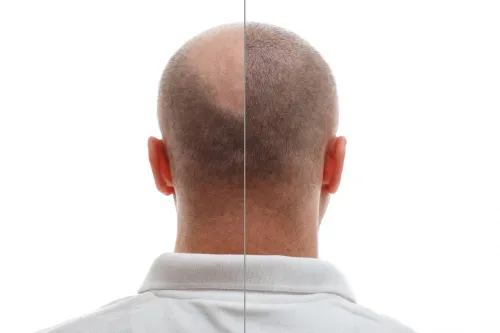


Early thinning can reflect miniaturising follicles, temporary shedding, inflammation, nutritional deficiency or another condition that needs diagnosis before injections. You will learn what GFC contains, how clinicians assess suitability, what a session involves, how long results take and which questions determine whether a treatment course is worth pursuing.
Key takeaways
- GFC is made from your blood; its composition depends on the processing protocol.
- Investigate ongoing shedding, a widening part, or reduced ponytail volume early.
- Expect scalp injections, brief downtime, and gradual results rather than instant regrowth.
- Judge value against diagnosis, treatment sessions, recovery time, and realistic improvement.
What GFC contains, and how it differs from PRP
During GFC for hair loss, the syringe is not automatically filled with isolated growth factors. A clinician draws your blood and processes it into a growth factor concentrate, but the final product depends on the protocol.
It may contain plasma with platelets, platelet-derived growth factors, or a preparation designed to reduce platelets while retaining soluble growth factors.
| Approach | What is injected | Why the distinction matters |
|---|---|---|
| GFC | A processed blood fraction containing plasma and growth factors, with platelet content varying by protocol | “GFC” does not identify one standard preparation |
| PRP | Platelet-rich plasma, usually injected with its concentrated platelets | The treatment is defined by the platelet-rich fraction |
GFC vs PRP is therefore a protocol comparison, not simply two names for the same injection. PRP uses platelets as a major source of released signalling proteins; GFC may retain platelets or separate them during processing. Blood volume, anticoagulant use, centrifugation, activation and injection depth can also differ.
Do not transfer evidence from platelet-rich plasma for hair loss to every GFC product. PRP studies themselves use varied systems and schedules, while GFC research remains smaller and less uniform. Ask the clinic what remains in the syringe, how it was prepared, and whether the proposed evidence matches that exact protocol.
A claim that “growth factors” are injected is incomplete without this information.
How a dermatologist identifies early thinning worth investigating
Early hair thinning is worth investigating when the part is widening, the crown or temples are becoming more visible, the ponytail is smaller, or shedding persists beyond a normal wash cycle. The dermatologist records its duration, hair-loss pattern, family history and recent illness, weight loss, childbirth, stress, surgery or dietary change.
Examination checks hair-shaft diameter, density, scalp redness, scale, pustules, tenderness and follicular openings.
The assessment may include a hair-pull test and dermoscopy. A pull test showing numerous club hairs supports active shedding; dermoscopy showing varied shaft diameters and miniaturised hairs supports androgenetic alopecia, while smooth empty patches or broken hairs point elsewhere.
| Pattern or finding | Possible cause | Why it changes the decision |
|---|---|---|
| Diffuse shedding after illness, surgery or dietary restriction | Telogen effluvium, iron deficiency, thyroid disease or medication-related shedding | Treat or investigate the trigger before injections |
| Gradual crown, part-line or temple thinning with miniaturised hairs | Early non-scarring androgenetic alopecia | GFC could be considered as an adjunct while proven treatment continues |
| Round, sharply defined patches or “exclamation-mark” hairs | Alopecia areata | Requires different medical management |
| Hair loss along tight hairstyles, with broken hairs or scalp pain | Traction alopecia | Remove tension; permanent loss needs separate assessment |
| Scale, pustules, redness, pain or missing follicular openings | Infection, inflammatory or scarring alopecia | Investigate promptly; GFC cannot restore destroyed follicles |
Before recommending treatment, the clinician reviews anemia, platelet disorders, anticoagulants, immune status, active scalp disease and relevant medicines. Rapid progression, scarring signs or unexplained shedding calls for diagnosis first.
What happens during a GFC session and during recovery
A GFC hair treatment procedure begins with confirming that injections fit your diagnosis and health history, not simply with a blood draw. The clinician reviews hair-loss duration, medicines, anticoagulants, platelet disorders, anemia, immune problems, and any active scalp infection or inflammatory disease. A scalp examination checks injection areas and signs that require different treatment.
The appointment usually follows these steps:
- You discuss expected benefit, alternatives, risks, and whether established treatment should continue.
- After consent, the clinician performs the blood draw for GFC using the volume and collection tubes required by that clinic’s protocol.
- The sample is processed in a centrifuge or preparation system. Ask which parts are retained, whether an anticoagulant or activation step is used, and how this protocol differs from PRP; GFC is not internationally standardised.
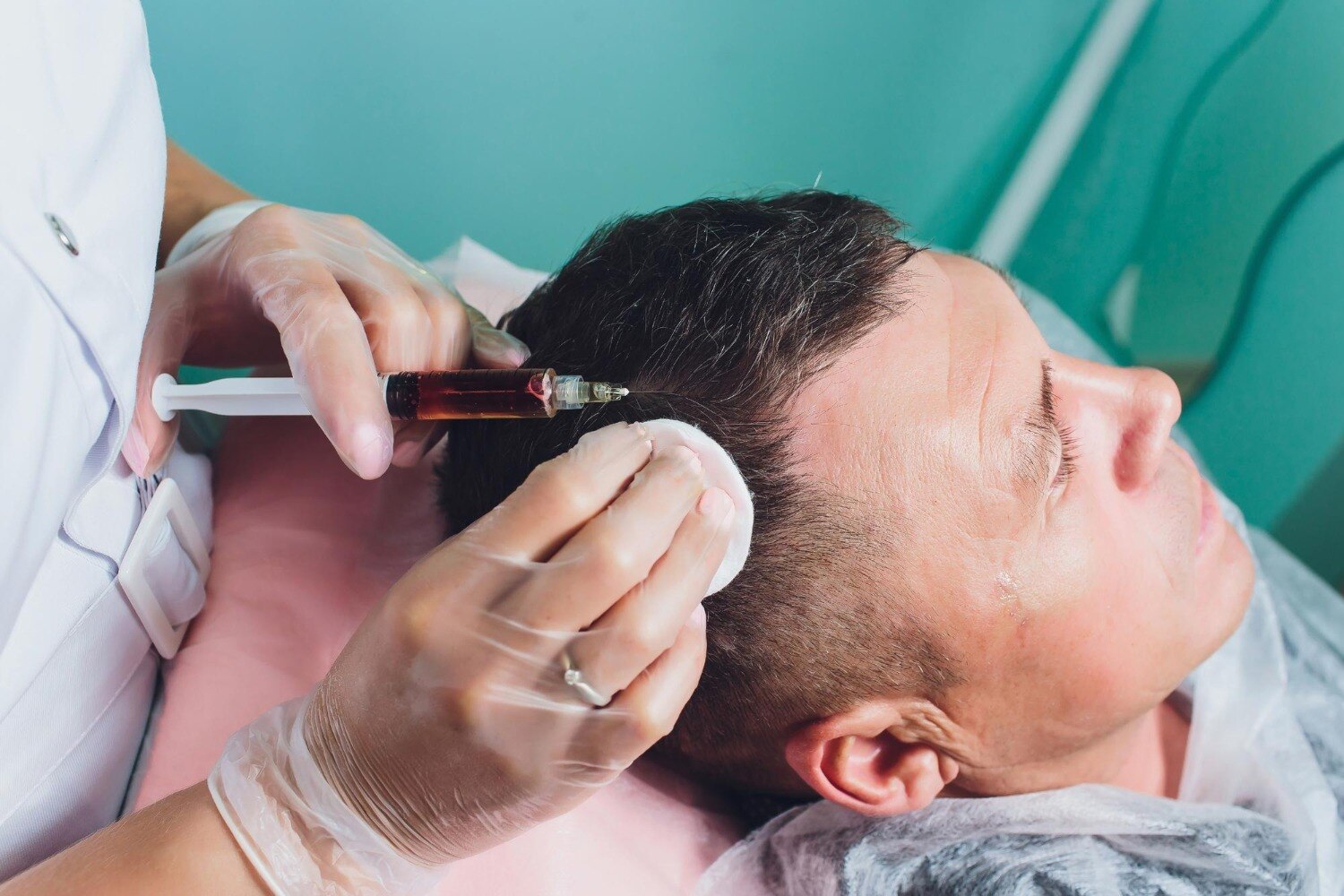
- The scalp is cleaned and marked. A numbing cream or local anaesthetic may be offered, followed by GFC injections at the planned depth and spacing across thinning areas.
- The clinician checks the sites before you leave and gives written aftercare instructions.
Expect tenderness, redness, swelling, small bruises, or a headache for a short period. Temporary shedding can occur. Keep the scalp clean, avoid rubbing or picking injection sites, and follow the clinic’s instructions about washing, exercise, and medicines. Seek prompt medical advice for spreading redness, increasing pain, pus, fever, persistent bleeding, or faintness.
Do not stop prescribed anticoagulants without the prescribing clinician’s approval.
What improvement can GFC support, and when can you judge it
Realistic GFC hair regrowth results usually mean less shedding, thicker-looking existing hairs, and a modest increase in hair density where follicles are still alive. A change in hair shaft calibre can appear before clearly visible new growth, so an early improvement does not prove that new follicles have formed.
| Change or limitation | What GFC may support | What GFC cannot do |
|---|---|---|
| Reduced shedding | Fewer hairs lost during washing or combing | Guarantee permanent control of the underlying cause |
| Miniaturising follicles | Greater calibre and density in early, non-scarring androgenetic alopecia | Restore a follicle that has been permanently destroyed |
| Smooth bald or scarred skin | No reliable follicle recovery | Create new follicles or replace a hair transplant |
| Patchy loss | Benefit only after the cause is diagnosed and treated appropriately | Treat alopecia areata, infection, inflammation, or nutritional deficiency by itself |
Measure progress at about three months for an early trend and again at six months for a more meaningful judgment. Hair cycles move slowly, and swelling, hair fibres, styling products, or different lighting can exaggerate apparent GFC hair regrowth results.
Use standardised photographs with the same hair length, parting, camera distance, and lighting. Trichoscopy or hair counts within a defined scalp area provide stronger evidence than memory or casual inspection.
Longer follow-up is needed to judge durability; current GFC studies are small, short, and less consistent than the evidence often cited for PRP, so they do not establish superiority over minoxidil, finasteride, or standard PRP.
How to decide whether a GFC treatment course is worth your time
A GFC treatment course is worth your time only when the expected benefit justifies the appointments, cost, injection discomfort and uncertain evidence. GFC does not remove the androgen sensitivity behind many pattern hair-loss cases, so stopping effective background treatment can make the procedure appear to fail.
Compare the proposal on these points:
| Question | A useful answer | Warning sign |
|---|---|---|
| Protocol | The clinician names the preparation, injection areas and planned dose | “Growth factors” without specifics |
| Schedule | A common study-derived pattern is three GFC treatment sessions about four weeks apart, followed by assessment after several months | Guaranteed dates for regrowth |
| Maintenance | A review determines whether GFC maintenance is needed; no universal schedule is established | Automatic lifelong sessions |
| Background treatment | Minoxidil or appropriate oral antiandrogen therapy is discussed when suitable | You are told to stop proven treatment without a reason |
| Safety | Review of anticoagulants, platelet disorders, anemia, infection, inflammation, immune status and medicines | No medical screening |
| Measurement | Baseline and follow-up use trichoscopy, hair counts in a defined area and matching photographs | Judgement based only on mirror impressions |
Bring these questions to a hair-loss treatment consultation in Pune, including one at Skinzone Clinic-Skin, Hair & Aesthetic Clinic Pune: What diagnosis are we treating, what happens if I choose minoxidil or observation instead, and what result would make us stop?
Choose GFC when the plan has a defined review point and objective measurements. Delay it when the diagnosis is unclear, active scalp disease is present, bleeding risk is unresolved, or the clinic promises maintenance without explaining the evidence.
Frequently asked questions
What does GFC contain, and how does it differ from PRP?
GFC is a blood-derived growth factor concentrate, but its final composition depends on the processing protocol. PRP is platelet-rich plasma prepared from your blood and used without assuming the same concentration or formulation.
How does a dermatologist identify early hair thinning worth investigating?
A dermatologist assesses ongoing shedding, a widening part, reduced ponytail volume, scalp visibility, hair-pull findings, medical history, medications, and possible causes of loss.
What happens during a GFC session and recovery?
The clinician draws and processes your blood, then injects the prepared concentrate into selected scalp areas. Expect temporary tenderness, redness, swelling, or small injection marks, and follow the clinic’s aftercare instructions.
What improvement can GFC support, and when can you judge it?
GFC may support reduced shedding and improved hair density when the underlying condition is suitable for treatment. Hair changes take time, so judge progress through consistent photographs and clinical review rather than immediately after treatment.
How do you decide whether a GFC treatment course is worth your time?
Compare the diagnosis, expected benefit, number of sessions, appointment time, recovery, cost, alternatives, and your willingness to maintain follow-up before starting.