

A narrow pit, a broad depression, a raised lump, and a flat brown mark are not the same acne-related problem, so they should not be treated with the same procedure. By identifying the scar’s shape, depth, tethering, colour and activity of the acne, you can understand which options are usually considered, how treatment is sequenced, and what improvement is realistic.
Key takeaways
- Flat red or brown marks change colour but do not alter skin texture.
- Ice-pick, boxcar and rolling scars require different treatment approaches.
- Mixed scars usually need a staged combination of procedures.
- Use sun protection and professional assessment to reduce treatment risks.
How to Tell an Acne Scar from a Flat Post-Acne Mark
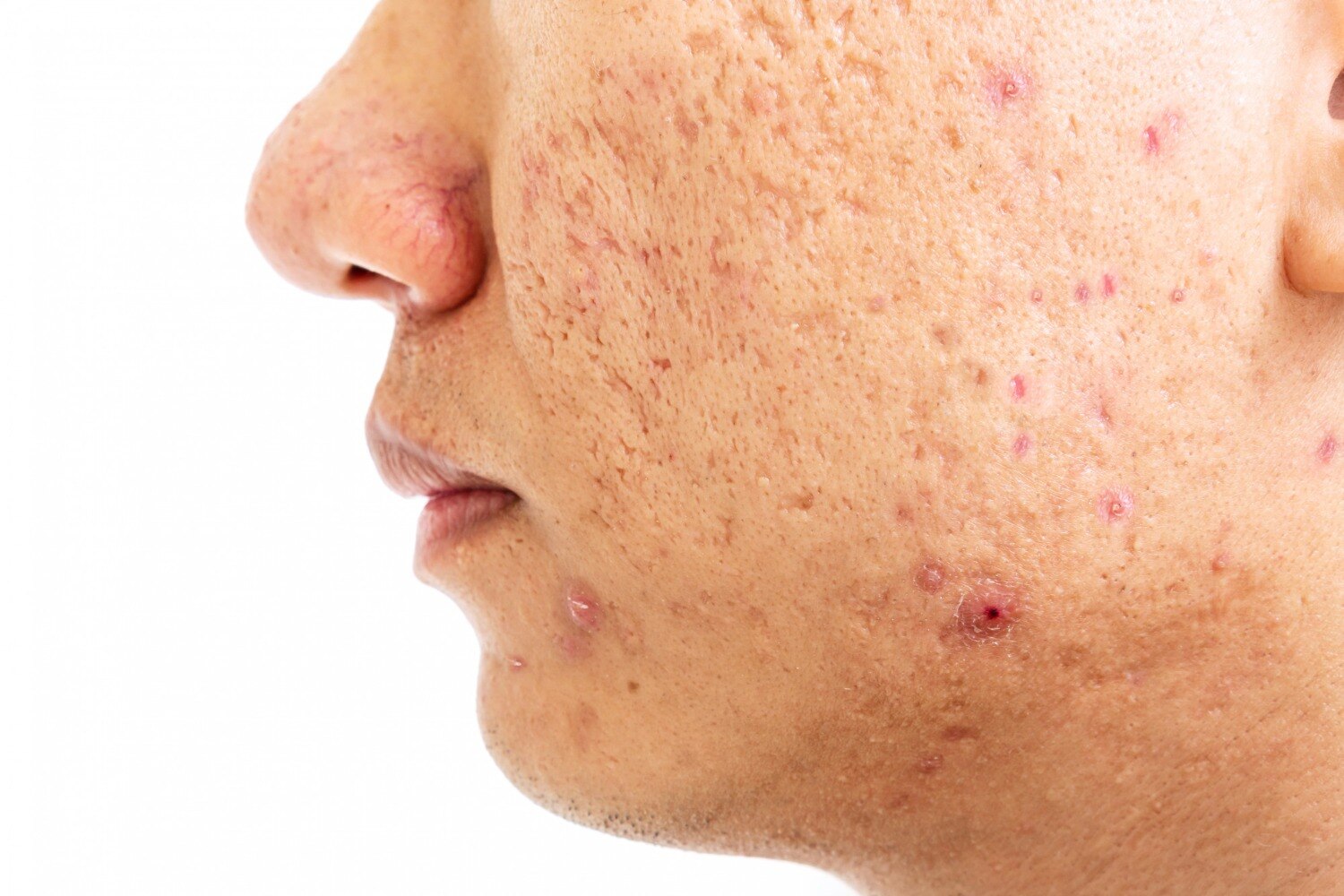
A flat red or brown post-acne mark changes colour, not contour. It does not form a pit, edge, or lump, and the skin surface remains level when viewed in side light. Red marks reflect persistent inflammation or altered blood vessels; brown marks are post-inflammatory hyperpigmentation. Both can fade with time and strict sun protection.
Use these visual clues to classify a true scar:
1. Ice-pick scars are narrow openings that extend deeply into the skin, resembling a pinprick or enlarged pore. Their depth is greater than their visible width.
2. Boxcar scars are round or oval depressions with sharply defined, nearly vertical edges. They can be shallow or deep and usually create a clear shadow.
3. Rolling scars are broad, wave-like depressions with sloping edges. They may look less obvious when the skin is stretched because fibrous bands beneath the surface pull the skin downward.
4. Hypertrophic scars are firm, raised areas that stay within the boundary of the original acne injury. They can be pink, red, or darker than nearby skin.
5. Keloids are raised, rubbery growths that extend beyond the original spot. They may enlarge over time and feel itchy, tender, or tight.
A mark that is flat to touch is not an atrophic scar, even if its colour is striking. Texture-directed procedures will not automatically remove red or brown discoloration.
Which Treatment Matches Each Scar Type?
The contour determines the procedure. A narrow pit needs targeted treatment, while a tethered depression needs release beneath the skin; treating both with the same superficial method wastes sessions.
| Scar type | Commonly used options | What the choice addresses |
|---|---|---|
| Ice-pick scars | TCA CROSS; punch excision or punch elevation; fractional laser resurfacing for remaining texture | TCA CROSS places concentrated trichloroacetic acid inside each pit. Punch techniques reach deep, narrow scars that surface treatment cannot. |
| Boxcar scars | Fractional laser resurfacing; microneedling; radiofrequency microneedling; punch techniques; dermal fillers | Resurfacing and needling improve shallow edges and texture. Punch treatment or filler can suit selected deep, sharply defined depressions. |
| Rolling scars | Subcision; fractional laser resurfacing; microneedling; radiofrequency microneedling; dermal fillers | Subcision cuts fibrous bands pulling the skin downward. Resurfacing alone will not correct a rolling scar that remains tethered. |
| Raised scars and keloids | Corticosteroid injections; silicone therapy; specialist-directed scar treatment | These scars sit above the skin, so treatments designed to add collagen or remove depressions are the wrong match. |
| Flat red or brown marks | Pigment-directed treatments, such as prescribed topical therapy or selected light-based procedures; daily broad-spectrum sunscreen | These marks have colour change without a permanent depression or lump. Scar-remodelling procedures do not directly solve the colour. |
A clinician may pair targeted treatment with resurfacing when one scar has both depth and surface irregularity. Expect gradual improvement in depth, shadowing and texture, not complete removal in one session.
Why Mixed Scars Need More Than One Procedure
A clinician sequences combination treatment by mapping each scar’s depth, edges, tethering, and whether it is depressed or raised—not by using one “severity” label. Active acne is controlled first, because new inflammation can create fresh scars and obscure whether treatment is working. The plan then addresses the structural problem that would limit later procedures.
| Stage | Scar feature | Options | Why sequence it this way |
|---|---|---|---|
| 1. Focal correction | Narrow, deep ice-pick scars | TCA CROSS, punch excision, punch elevation | Treat individual deep defects before broad resurfacing |
| 2. Release | Rolling scars with tethering | Subcision | Free the pulled-down skin before improving its surface texture |
| 3. Texture refinement | Residual rolling or boxcar irregularity | Fractional laser, microneedling, fractional radiofrequency | Build gradual improvement after deeper structural work |
| 4. Selected volume loss | Depressed scars that respond to lifting | Dermal fillers | Add volume only after assessing depth, anatomy, and tethering |
The clinician reassesses after each stage rather than automatically adding every procedure. Dermal fillers do not remove scar structure or replace subcision, and they are unsuitable for very narrow ice-pick defects; injection depth, vascular anatomy, and reversibility affect safety.
Raised scars require a different plan, such as corticosteroid injections or silicone therapy, rather than treatment designed for atrophic scars. The realistic goal is less depth, shadowing, and uneven texture—not complete removal.
What Recovery, Session Planning and Skin Risks Should You Expect?
Plan treatment only after active acne is controlled. New inflamed lesions can create fresh scars and make improvement difficult to judge. Before any procedure, the clinician should record your skin tone, medicines, history of keloids, and risk of post-inflammatory hyperpigmentation; darker skin often warrants a conservative test area and lower-risk settings.
1. Microneedling and radiofrequency microneedling usually involve cleansing, topical anaesthetic, and controlled passes over the scars. Expect redness, swelling, and sensitivity for one to three days; avoid picking, heat, and unapproved products while the skin settles. Clinics commonly plan three to six sessions, spaced about four to six weeks apart.
2. Fractional laser treatment requires eye protection and carefully chosen settings. Nonablative lasers usually cause less downtime but need more sessions; ablative fractional lasers create stronger resurfacing, crusting, and several days to a week or more of recovery. Follow the prescribed cleansing, moisturising, and sun-protection routine after every session.
3. Subcision, punch procedures, and fillers can produce bruising, swelling, or tenderness. Schedule them around work and events, and expect staged treatment when scars have different depths. A clinician may reassess after healing before adding another procedure.
4. Raised scars are managed with corticosteroid injections, sometimes combined with silicone therapy, rather than depression-focused resurfacing. Repeat injections are commonly spaced several weeks apart; report excessive thinning or colour change promptly.
Brown marks and persistent redness need pigment-directed treatments or vascular care, not automatic resurfacing. Daily broad-spectrum sunscreen reduces post-inflammatory hyperpigmentation risk; aggressive peels or lasers can cause prolonged darkening or lightening.
How to Turn Scar Classification into a Safe Treatment Plan
A safe plan starts with diagnosis, not the device. Ask the clinician to identify each scar’s morphology, separate depressed or raised scars from flat red or brown marks, and explain which finding the proposed procedure will change.
Active acne should be controlled first: new inflammatory lesions can create more scars and make the result difficult to judge.
| Question to ask | Why it matters | When specialist assessment is useful |
|---|---|---|
| Which scar type are you treating? | Ice-pick, boxcar, rolling, raised scars and colour changes need different methods. | The diagnosis is unclear or several types coexist. |
| Why this procedure, and why not another? | Subcision, punch treatment, resurfacing and injectables address different scar structures. | The plan recommends one procedure for every scar. |
| How does my skin tone affect settings and risk? | Aggressive lasers, peels or needling can trigger prolonged hyperpigmentation or hypopigmentation. | You have a darker skin tone, prior pigment changes or a history of poor healing. |
| How many sessions and what is realistic improvement? | Texture usually improves incrementally; complete removal is not a reliable promise. | The clinic guarantees permanent, total clearance. |
| What aftercare is required? | Sun protection helps reduce post-treatment pigment changes and protects healing skin. | You cannot avoid significant sun exposure during recovery. |
Skinzone Clinic-Skin, Hair & Aesthetic Clinic Pune should be considered in the same practical way: ask for a documented diagnosis, staged plan, risks, downtime and review point before choosing treatment. Specialist assessment matters most for keloids, persistent active acne, mixed deep scars, uncertain marks or previous treatment complications.
Related service
Acne Scars Treatment Specialist in Pune Acne Scars Treatment Specialist in Bibwewadi, Kondhwa, Dhankawadi, Pune Acne scars can leave behind marks that affect your skin’s smoothness and your self-confidence. View service → |
Frequently asked questions
How can you tell an acne scar from a flat post-acne mark?
A flat red or brown mark changes colour but does not create a pit, raised edge or lump. A true acne scar changes the skin’s contour or texture.
Which treatment matches each acne scar type?
Treatment depends on scar structure: ice-pick, boxcar and rolling scars respond to different procedures, while flat marks need pigment or redness-focused care.
Why do mixed acne scars need more than one procedure?
Different scar depths and shapes respond to different techniques, so a combination plan can address rolling, boxcar and ice-pick scars separately.
What recovery and skin risks should you expect from acne scar treatment?
Recovery varies by procedure. Ask about redness, swelling, downtime, post-inflammatory hyperpigmentation and the number and spacing of sessions before treatment.