A narrow pit, a broad depression, a red mark and a raised lump are not the same problem, so treating them with one standard procedure can waste time or worsen discoloration. By identifying the scar pattern, checking whether acne and irritation are controlled, and matching depth and skin condition to the procedure, you can understand why a staged or combined plan may be recommended.
Key takeaways
- Stretch relaxed skin to distinguish depressions from flat acne marks.
- Control active acne and irritation before starting scar procedures.
- Match treatment to scar type, depth, tethering and overall skin condition.
- Combination treatment addresses different scar features more effectively than one procedure.
How to tell an acne scar from a mark, pore or active pimple
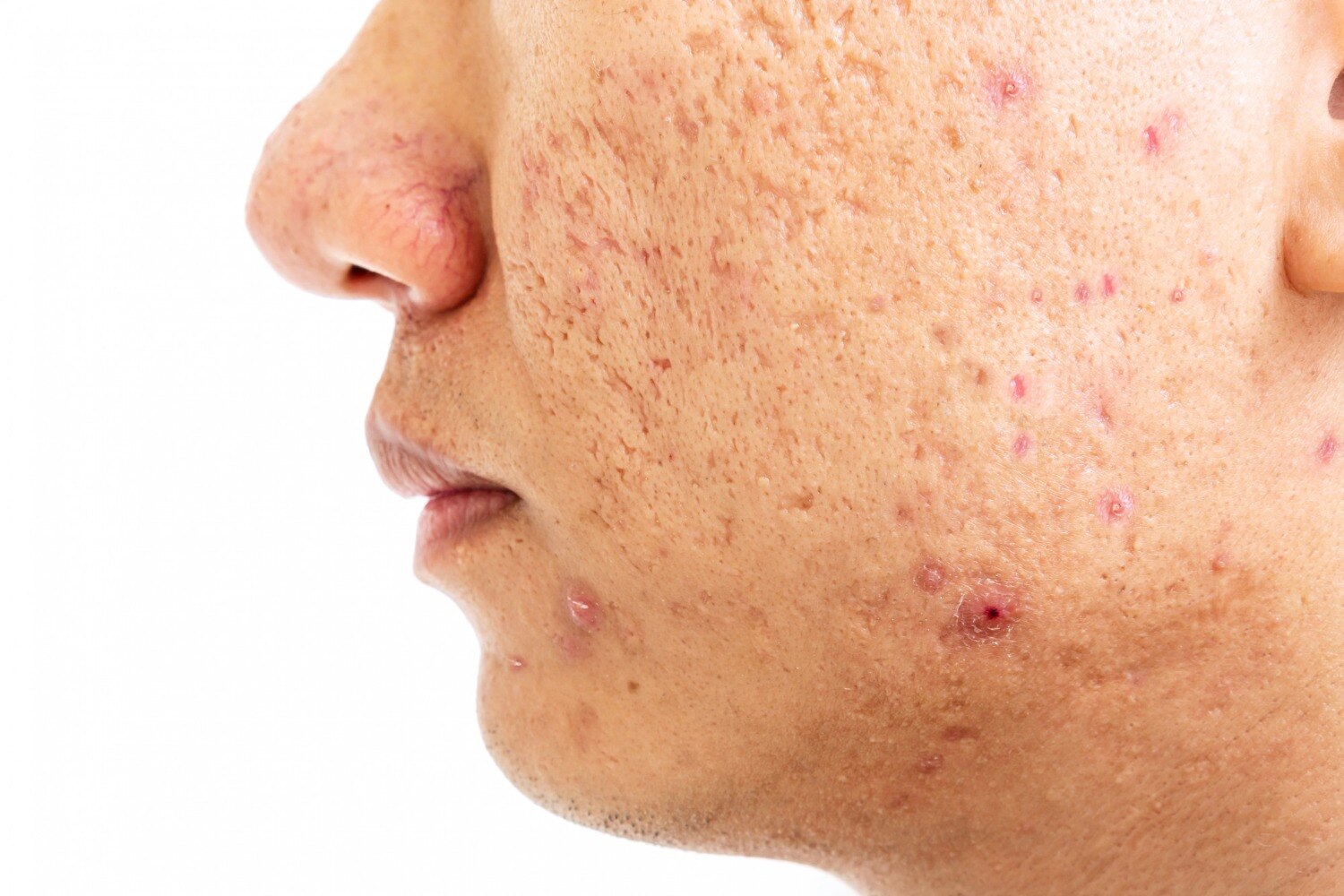
A true acne scar changes the skin’s texture and remains after the spot has healed; a mark changes colour but leaves the surface flat. Examine the area in side light and with the skin relaxed, then gently stretch it to reveal shallow depressions or tethering.
1. Ice-pick scars are narrow openings that descend deeply, often looking like a tiny puncture. The visible entrance can resemble an enlarged pore, but it does not behave like one: it remains fixed and does not fill or shrink after cleansing.
2. Boxcar scars are round or oval depressions with sharply defined, almost vertical edges. Their bases can be shallow or deep, and their borders remain visible when you stretch the skin.
3. Rolling scars are broader, softer waves that create uneven shadows rather than a single hole. Fibrous bands tether them to deeper tissue, so the depression may flatten when you pull the skin sideways.
4. Hypertrophic scars are firm, raised areas that stay within the original acne spot. Keloids are also raised and firm but grow beyond the original wound boundary, sometimes becoming itchy or tender.
5. A post-inflammatory red or brown mark is flat. It changes colour without a dip or lump and usually fades gradually.
6. An active pimple is new, tender, swollen, warm, or filled with pus; it changes over days. Eczema, rosacea, irritation, or infection can also mimic acne and should not be mistaken for an established scar.
Why active acne and skin condition come before scar procedures
Start scar procedures after active acne is controlled, because new inflamed lesions can create more scars and make improvement difficult to judge. Continue a maintenance acne regimen during scar treatment unless your clinician changes it.
A dark or red mark needs different care from a true depression: sunscreen and topical pigment treatment can improve colour, but they cannot reliably raise lost dermal tissue.
Treatment may be delayed or modified if you have:
- Eczema, rosacea, an active infection, or a damaged skin barrier. Procedure-related heat or injury can worsen inflammation and prolong healing.
- Recent tanning or a strong tendency toward post-inflammatory hyperpigmentation. Conservative settings, strict photoprotection, and a test spot may be safer, especially for darker skin types.
- Current or recent isotretinoin use. Give the clinician the dose and stop date; timing depends on the planned procedure rather than one universal waiting rule.
- A history of keloids or hypertrophic scars. Raised scars need a different plan, and cutting a keloid alone can lead to recurrence.
- A history of cold sores, an active herpes outbreak, or medicines that increase bleeding. These details can require preventive treatment, postponement, or a procedural change.
The skin should be calm, intact, and free of untreated infection before resurfacing, microneedling, or similar treatment begins. A clinician should assess both texture and colour first.
Which treatment matches each scar type and depth
The scar’s shape, depth and attachment to deeper tissue decide the procedure; colour is treated separately. A dark or red mark needs pigment treatments, not a scar-raising procedure.
| Scar finding | Preferred options | Why it fits |
|---|---|---|
| Brown or red mark without depression | Topical retinoids, pigment treatments, sunscreen, selected chemical peels | Improves colour; cannot reliably lift lost dermal tissue |
| Rolling scar with tethering | Subcision, followed by microneedling, fractional laser resurfacing or a selected filler | Releases fibrous bands pulling the skin downward |
| Ice-pick scar | TCA CROSS or punch excision/elevation | Targets the narrow, deep tract; broad resurfacing alone may miss it |
| Shallow boxcar scar | Microneedling, chemical peels or fractional laser resurfacing | Treats wider, less sharply edged depressions |
| Deep boxcar scar with defined borders | Punch elevation, punch excision, filler or fractional laser resurfacing | Repairs the deep centre or blends the edges |
| Raised hypertrophic scar | Silicone therapy or steroid injection | Reduces excess scar tissue; resurfacing can worsen it |
Microneedling creates controlled injury with less thermal damage and usually less downtime. Fractional laser resurfacing can remodel more strongly, but brings more redness, wound care and pigmentary risk. A clinician also adjusts the plan for skin thickness, tanning, eczema, infection, active acne, recent isotretinoin, keloid tendency and a fragile skin barrier.
Why combination treatment is chosen instead of one procedure
A single procedure rarely corrects scars that differ in depth, shape and attachment to the underlying skin. Subcision can release fibrous bands beneath rolling scars, but it does not remove the narrow, epithelialised tract of a true ice-pick scar. That scar may need TCA CROSS, punch excision or punch elevation instead.
A staged plan also separates mechanical correction from surface remodelling. Radiofrequency microneedling or fractional resurfacing can soften shallow boxcar edges and improve overall texture, while focal treatment targets the few scars that remain sharply defined.
1. Release tethered scars with subcision when downward-pulling bands prevent the skin from lifting. Treating every depression this way can waste injury on scars that are not tethered.
2. Treat narrow or deep individual scars with TCA CROSS, punch excision or punch elevation. These methods address a concentrated defect rather than applying the same energy across unaffected skin.
3. Resurface after the deeper architecture improves, using radiofrequency microneedling or another selected resurfacing method for broader textural irregularity. Fractional ablative resurfacing can be stronger, but it brings more redness, wound care and pigment risk.
4. Control brown or red post-inflammatory marks with sun protection and pigment-directed treatment. These measures improve colour, not a true depression.
Spacing sessions allows swelling and pigment changes to settle before the next decision. It also lets the clinician adjust treatment for healing, skin tone, active acne and any post-inflammatory hyperpigmentation instead of committing to one aggressive procedure.
How a consultation turns scar findings into a safe treatment plan
Before choosing a procedure, ask the clinician to document scar type, depth, tethering, colour, skin thickness and active acne, then explain which finding each treatment will target. At Skinzone Clinic-Skin, Hair & Aesthetic Clinic Pune, this review should also cover your medication and healing history rather than selecting a procedure from a photograph alone.
- Ask whether redness or post-inflammatory hyperpigmentation is being mistaken for a depressed scar; pigment treatment and photoprotection will not reliably raise missing dermal tissue.
- Disclose isotretinoin use, recent tanning, eczema, rosacea, infection, herpes, bleeding-risk medicines and any history of keloids.
- Ask whether darker skin or easy pigmentation requires conservative settings, a test spot or pigment-directed treatment.
- Ask how active acne will be controlled during scar treatment, since new lesions can create scars and obscure the result.
- Request the expected number of sessions, downtime, risks, maintenance plan and comparison photographs taken in consistent lighting.
| Finding to review | Treatment implication | Result to judge |
|---|---|---|
| Dark or red mark | Pigment control and photoprotection | Fading of colour, not raised texture |
| Rolling scar with tethering | Subcision may release deeper bands | Smoother shadowing; not complete erasure |
| Ice-pick or small boxcar scar | Focal treatment such as TCA CROSS may fit; excess acid can cause pigmentation or scarring | Narrowing and softening, often over sessions |
| Raised scar | Scar-directed treatment differs from resurfacing | Flattening without creating further injury |
A realistic plan promises measurable improvement, not flawless skin. Ask what happens if the first procedure fails, and whether the clinician will adjust treatment rather than repeat injury.
Related services
Acne Scars Treatment Specialist in Pune Acne Scars Treatment Specialist in Bibwewadi, Kondhwa, Dhankawadi, Pune Acne scars can leave behind marks that affect your skin’s smoothness and your self-confidence. View service → |
Acne Treatment Specialist in Pune Acne Treatment Specialist in Bibwewadi, Kondhwa, Dhankawadi, Pune Dr Nirali Shah Pawar is one of the leading and best Acne Treatment Specialists in Pune at Skinzone Clinic in Bibwewadi. View service → |
Frequently asked questions
How can you tell an acne scar from a mark, pore or active pimple?
A scar changes skin texture after healing. A mark changes colour while staying flat; side lighting, relaxed skin and gentle stretching can reveal depressions or tethering.
Why must active acne be treated before acne scar procedures?
New breakouts can create additional scars, while irritation or uncontrolled inflammation can increase treatment risk. The skin should be stable before scar procedures begin.
Which treatment is selected for each acne scar type?
Treatment depends on whether scars are rolling, boxcar or ice-pick scars, along with their depth, tethering and the skin’s condition. Different depths require different approaches.
Why is combination treatment used for acne scars?
One procedure may not correct every feature. Combining approaches can address surface texture, depressed scars and tethering when the assessment supports it.
What happens during an acne scar treatment consultation?
A clinician examines scar type, depth, active acne, pigmentation, inflammation and skin sensitivity, then uses those findings to create a staged and safer treatment plan.