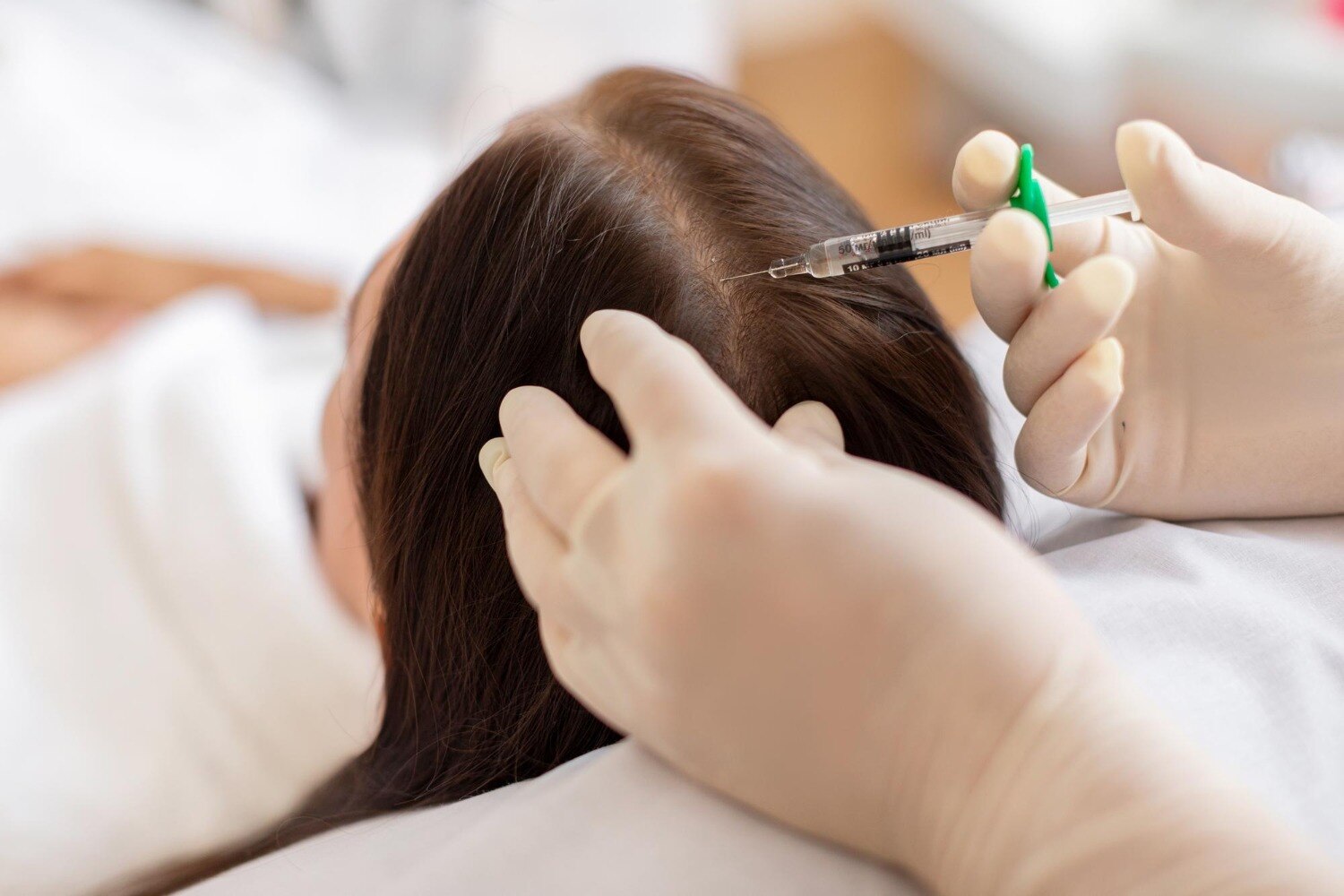
Hair thinning is not one diagnosis: miniaturised follicles in androgenetic alopecia call for a different plan from sudden shedding, smooth patches or a scarred scalp. By the end, you will know which patterns may justify discussing GFC, how clinicians investigate the cause, what the appointment involves and how to judge benefits against effort, risks and alternatives.
Key takeaways
- GFC is most suitable for miniaturised follicles, not completely smooth or scarred scalp.
- Confirm the cause of thinning before choosing injections.
- Compare GFC with PRP, minoxidil and other established treatments.
- Postpone treatment when the diagnosis is unclear or scalp disease is active.
Which hair-loss patterns may fit GFC treatment?
GFC for hair loss is most reasonable to discuss when androgenetic alopecia has left miniaturised follicles in the scalp. Those follicles are weakened, not gone, so injection treatment has a plausible target. It is not expected to recreate follicles in a completely smooth, long-standing bald area or reverse established scarring.
| Pattern | What it means | How GFC fits |
|---|---|---|
| Androgenetic alopecia | Gradual patterned thinning with miniaturised follicles | Best-supported potential use; consider it an adjunct, not a replacement for medical treatment |
| Telogen effluvium | Diffuse shedding after illness, stress, rapid weight loss or another trigger | Correct the trigger first; injections do not solve ongoing causation |
| Nutritional shedding | Hair loss linked to inadequate iron, protein, vitamin B12 or other nutrients | Investigate and treat the deficiency before considering GFC |
| Alopecia areata | Sudden smooth patches caused by an autoimmune process | Requires diagnostic confirmation and condition-specific treatment; use caution |
| Traction alopecia | Loss from repeated tight hairstyles or extensions | Remove traction early; longstanding damage may become permanent |
| Scarring alopecia | Inflammation destroys follicles and leaves permanent loss | Needs prompt specialist assessment; GFC cannot reverse established scarring |
Pain, burning, pustules, heavy scale, missing follicular openings or rapidly expanding patches are reasons to investigate rather than assume routine pattern hair loss. A completely smooth patch, broken hairs or signs of inflammation also warrant examination before injections.
A diagnosis should come first because treating thyroid disease, iron deficiency, medication-related shedding or another underlying cause may matter more than injecting the scalp.
How is the cause of thinning confirmed before injections?
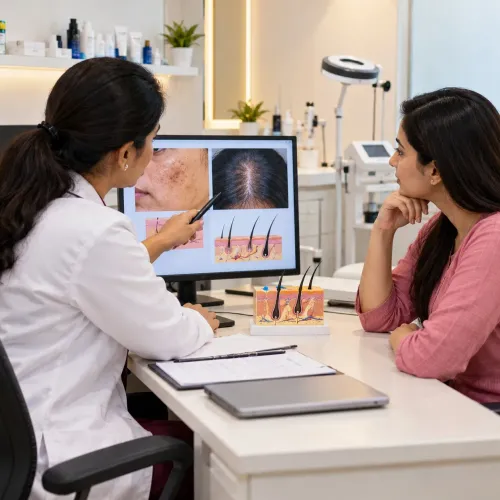
Injections should follow a diagnosis, because treating the cause of shedding may matter more than injecting the scalp. A scalp examination and dermoscopy help distinguish patterned miniaturisation from alopecia areata or scarring disease.
1. Examine the scalp and hair shafts for miniaturised hairs, broken hairs, exclamation-mark hairs, heavy scale, pustules, redness, pain or burning. Loss of follicular openings or rapidly expanding patches requires investigation before routine treatment.
2. Review recent illness, fever, surgery, major stress, diet changes, weight loss, new medicines, hormonal changes and medical conditions. This history can identify telogen effluvium, medication-related shedding, nutritional deficiency or thyroid disease.
3. Order targeted blood tests when the history or examination supports them. Ferritin is relevant when iron deficiency is possible; thyroid-stimulating hormone (TSH) helps assess suspected thyroid disease; vitamin B12 is reasonable when dietary deficiency, anaemia or neurological symptoms raise concern. No single panel is mandatory for every patient.
4. Record standardised photographs, including front, top, sides, crown and fixed parting views, with consistent lighting, hair length, camera distance and styling. Document baseline density, the diagnosis, treatment parameters and planned review date so a modest change is judged fairly.
Correcting iron deficiency, thyroid disease, a medication effect or another underlying problem may reduce shedding more effectively than scalp injections. Active inflammation, infection or severe anaemia also calls for medical assessment before a blood-draw-and-injection procedure.
What happens during a GFC appointment, and what recovery takes?
A GFC appointment begins with a consultation to confirm the plan, discuss expected benefit and risks, and obtain consent. Ask how long each stage will take, because appointment length varies with the clinic’s processing system and injection plan.
- A blood draw collects a small sample.
- The sample is processed to prepare the growth-factor concentrate; the method and time differ between clinics.
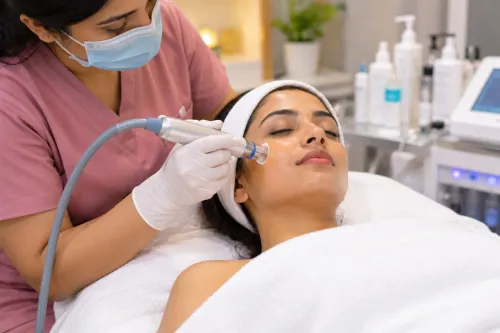
- The scalp is cleansed and prepared. Local comfort measures, such as a topical anaesthetic or cooling, may be used.
- The clinician delivers a series of scalp injections across the planned thinning areas.
Aftercare instructions govern when you can wash your hair. You may have scalp tenderness, tightness, swelling, bruising or a temporary headache for a short period. Follow the clinic’s advice about strenuous activity, heat, swimming and styling products; ignoring these restrictions can worsen irritation or bleeding.
Many people plan around scalp soreness rather than a prolonged absence from work, but recovery varies. Ask whether you should arrange the rest of the day without meetings or physical exertion. Contact the clinic for worsening pain, spreading redness, pus, fever or persistent swelling, because infection and prolonged inflammation require assessment.
Do not drive yourself if you feel faint after the blood draw.
How does GFC compare with PRP and established hair-loss treatment?
GFC vs PRP is not a choice between a proven treatment and an unproven one. “Growth factor concentrate” is not a single standardised protocol, so the injected product can differ substantially between clinics.
| Option | Preparation and contents | Injection variables |
|---|---|---|
| GFC | Blood processing may concentrate growth factors and platelets, with variable platelet and leukocyte content and red-cell contamination | Activation method, injection depth, volume and dose differ by protocol |
| PRP | Centrifuged platelet-rich plasma, with platelet, leukocyte and red-cell levels determined by the collection system | Injection depth, number of sites, dose and session schedule vary |
| Medical treatment | No blood product; minoxidil or other prescribed medicines act through different mechanisms | Dose, application or tablet schedule, duration and monitoring depend on the medicine |
Small GFC studies cannot establish superiority over platelet-rich plasma. PRP studies also vary in preparation, patient selection, treatment schedules and endpoints; meta-analyses report improved density or hair counts in some patients, not a guaranteed result for every protocol.
For pattern hair loss, GFC is better considered an adjunct than a replacement for treatment with evidence and established use. A clinician may discuss topical minoxidil, oral minoxidil, finasteride or dutasteride according to your sex, age, pregnancy potential, medical history and contraindications. These options carry different risks and should not be treated as interchangeable.
At Skinzone Clinic-Skin, Hair & Aesthetic Clinic Pune, use the consultation to ask for the proposed blood volume, platelet and leukocyte profile, red-cell level, activation method, injection depth, dose and comparison with medical treatment—not to assume one option suits every diagnosis.
Related services
PRP & GFC Therapy for Hair Growth in Bibwewadi, Kondhwa, Swargate, Pune, PCMC Are you struggling with hair thinning, hair loss, or reduced hair volume? At Skinzone Clinic, Pune, led by Dr. View service → |
Hair Fall Treatment Specialist in Pune Hair Fall Treatment Specialist in Bibwewadi, Kondhwa, Dhankawadi, Pune Hair Fall Treatment Specialist in Pune – Restore Healthy, Strong Hair. View service → |
When should you expect results, repeat sessions or postpone treatment?
Judge the GFC results timeline in months, not days: assess change around 3–6 months after treatment. Reduced shedding, thicker hair shafts and improved hair density are more realistic goals than guaranteed regrowth in every empty area. Early shedding or no immediate visible growth does not prove failure.
| Finding | What it means | How to judge value |
|---|---|---|
| Reduced shedding | Fewer hairs are being lost | Compare shedding with the baseline |
| Thicker shafts | Miniaturised hairs may look fuller | Use standardised photographs |
| More hair density | Existing follicles may produce stronger growth | Compare parting views at 3–6 months |
| A completely smooth bald area | Follicles may no longer be producing hair | Do not promise reliable regrowth |
Repeat sessions or maintenance treatment may be discussed because androgenetic alopecia continues to miniaturise follicles. No universally accepted GFC schedule exists, so ask what interval, endpoint and evidence support the proposed plan. A one-time series is not equivalent to a permanent hair transplant.
Postpone treatment or obtain individual medical review if you have:
- An active scalp infection, inflammation, pain, pustules or marked scale
- A significant bleeding disorder or medication-related bleeding risk
- Severe anaemia or an uncontrolled illness
- Pregnancy-related concerns requiring treatment review
Do not stop anticoagulants or antiplatelet medicines without the prescriber’s advice. A clinician should decide whether correcting the medical problem comes before injections.
Frequently asked questions
Which hair-loss patterns may fit GFC treatment?
GFC is most reasonable to discuss for androgenetic alopecia with miniaturised follicles that remain in the scalp. It is not expected to recreate follicles in completely smooth, long-standing bald areas or reverse established scarring.
How is the cause of hair thinning confirmed before GFC injections?
A clinician reviews your history, examines the scalp and assesses the pattern of loss. The evaluation helps distinguish androgenetic alopecia from conditions such as alopecia areata, telogen effluvium, scalp inflammation and scarring alopecia before treatment is chosen.
What happens during a GFC appointment, and what recovery is needed?
The scalp is examined and prepared before concentrated growth-factor material is injected into selected thinning areas. Ask the treating clinician about discomfort, washing, exercise, medication restrictions and signs that require review after the appointment.
How does GFC compare with PRP and established hair-loss treatment?
GFC and PRP are injection-based options, but they use different preparations. Established treatments such as minoxidil and finasteride address hair loss through different mechanisms and may remain important, depending on your diagnosis, medical history and treatment goals.
When should you expect results, repeat sessions or postpone GFC?
Hair growth takes time, so assess progress using consistent photographs and the schedule set by your clinician rather than expecting an immediate change. Postpone treatment when the diagnosis is unclear, scalp disease is active or the clinician has identified a medical reason to wait.