Laser hair reduction uses controlled light and heat to damage selected hair follicles, but it does not remove every follicle permanently. You will be able to understand which hairs respond, why sessions are spaced apart, what happens during treatment, and which preparation and safety steps affect the result.
Key takeaways
- Laser energy targets melanin in actively growing hair follicles.
- Dark hair responds best; blonde, grey and red hair need specific assessment.
- Plan several sessions because hairs grow in different cycles.
- Avoid waxing before treatment and protect treated skin from sun exposure.
How laser light damages the hair follicle
Laser hair reduction works through selective photothermolysis: melanin in a growing hair shaft absorbs a chosen wavelength of light and converts it into heat.
That heat travels down the shaft toward the follicle, injuring the cells that produce hair while the surrounding skin receives less energy and is protected as much as possible by pulse duration, wavelength selection and cooling.
The goal is follicle damage, not the removal of every follicle forever. A treated follicle can recover, fail to produce a visible hair for a time, or later produce a finer, lighter hair. This is why laser hair reduction means a long-term decrease in hair number and thickness rather than guaranteed permanent hair removal.
Maintenance sessions can be needed.
The laser does not target every follicle equally during one appointment. Energy works best when a follicle contains a pigmented hair in its active growth phase, but follicles enter that phase at different times.
Hair must remain inside the follicle for the laser to find its target, so shaving is compatible with treatment; waxing, threading and tweezing remove that target. Laser treatment is also different from IPL: a laser emits one defined wavelength, while IPL uses filtered broad-spectrum light.
Why hair colour, skin tone and body site affect the result
Dark coarse hair usually responds best because its melanin absorbs more laser energy than fine hair. Fine hair provides a weaker target, so increasing energy without careful assessment can irritate skin rather than improve results.
| Hair or skin characteristic | Expected response | Treatment implication |
|---|---|---|
| Dark coarse hair | Strongest target | Settings can deliver effective heat to the follicle |
| Fine hair | Weaker target; facial treatment carries a higher risk of paradoxical hypertrichosis | Assess energy and area carefully rather than treating every hair identically |
| Blonde hair or red hair | Limited absorption | Discuss realistic reduction; electrolysis may suit individual light hairs |
| Grey hair or white hair | Little or no melanin target | Laser is often ineffective; electrolysis may be more suitable |
| Darker skin tone | More epidermal melanin competes for energy | A longer-wavelength Nd:YAG laser, conservative settings and cooling can reduce risk, but burns and pigmentation changes remain possible |
Settings are chosen for hair thickness, skin tone, body site and tolerance. Fluence, pulse duration, spot size and cooling must provide follicle-heating energy without overheating the epidermis. IPL uses a broad range of wavelengths rather than one laser wavelength, so it is not interchangeable with a laser and still requires skin-specific settings.
Underarms and the bikini region often respond better than facial hair because they contain more coarse terminal hair. Facial hair is more closely affected by hormonal hair growth, so regrowth and maintenance are common. New or rapidly increasing facial hair warrants medical assessment because laser does not correct the hormonal cause.
Why you need several sessions and what happens during one
One session cannot catch every follicle in its anagen phase. Follicles enter this active stage at different times, so the hair-growth cycle determines a treatment interval of several weeks; facial hair often returns sooner than body hair, while the exact timing depends on the site and regrowth.
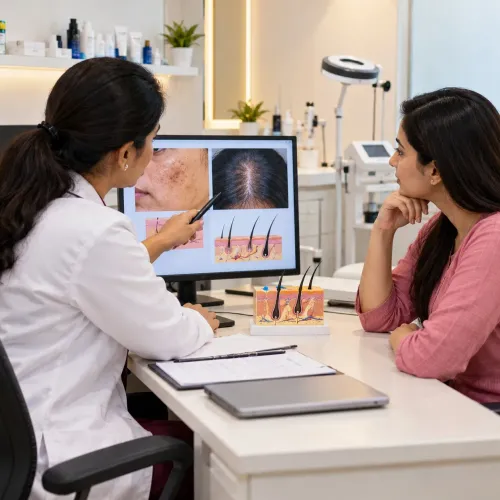
During a consultation, the clinician examines your hair, skin tone and treatment area, then selects settings and confirms whether shaving is suitable. Shaving leaves the follicular target in place; waxing, threading or tweezing removes it and can reduce the laser’s target.
- You wear wavelength-appropriate eye protection. Ordinary sunglasses are not a substitute, and treatment is kept away from the eyes because accidental exposure can cause serious injury.
- The operator cleans and positions the area, then applies cooling before and during treatment when the device uses it.
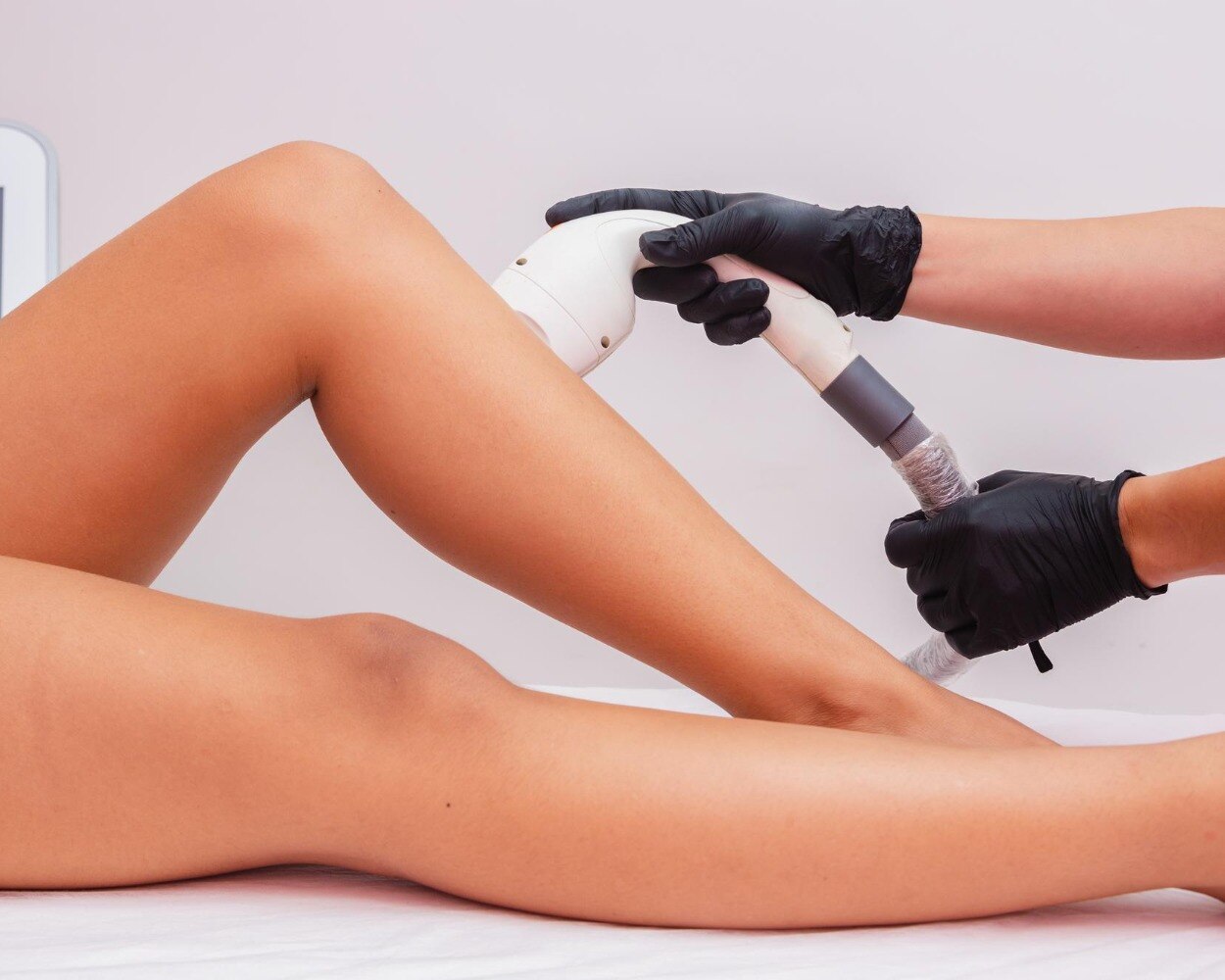
- The handpiece delivers rapid laser pulses. You may feel a snapping sensation, heat or brief stinging; facial and body areas differ in sensitivity and treatment time.
- Immediately afterward, perifollicular redness and swelling can appear as small bumps around treated hairs. These reactions usually settle as the skin calms.
- Report blistering, crusting, marked pain, scarring or lasting colour changes. New or denser hair near a facial or neck treatment also needs review because paradoxical increased hair growth can occur.
How to prepare and care for treated skin
Stop waxing, threading, tweezing, and epilating during the treatment course and for the interval your clinic specifies. These methods pull hair from the follicle, leaving less target for the laser. Shaving is usually compatible; shave as directed, often the day before, because it removes surface hair while leaving the follicular target in place.
- Arrive with clean, dry skin. Remove makeup, deodorant, creams, oils, and other products from the treatment area.
- Stop tanning and avoid intense sun exposure before treatment. A tan increases the risk of burns and pigmentation changes, so postpone the session until it fades if your clinic advises.
- After treatment, protect the area from sun exposure with clothing and a broad-spectrum sunscreen of SPF 30 or higher. Reapply sunscreen outdoors, and do not use tanning beds.
- For the first day, avoid strenuous exercise, hot baths, saunas, tight clothing, and friction on the treated skin. Pause irritating skincare, including retinoids, exfoliating acids, and scrubs, until the area feels comfortable.
- Mild redness, warmth, swelling, or small bumps around hairs can occur. Cool the skin with a clean compress and do not pick it. Contact the clinic promptly for blistering, crusting, severe pain, or pigmentation changes that persist or worsen.
When a clinical assessment matters before facial or body treatment
A clinical assessment matters before treatment if you have rapidly increasing facial hair, hirsutism, or hair growth with irregular periods, acne, or scalp thinning. Ask whether PCOS or another androgen-related disorder could be driving the growth; laser does not correct that cause, and treating it when indicated can improve overall control.
Tell the clinician about:
- Medicines, including isotretinoin, hormone treatments, photosensitising drugs, and anything recently stopped.
- Active or previous skin disease, cold sores, keloids, eczema, or abnormal pigmentation in the treatment area.
- Recent tanning or intense sun exposure. Treatment may need to wait until the tan fades because darker, recently exposed skin has a smaller safety margin against burns and pigment changes.
- The proposed laser wavelength, fluence, cooling method, test spot, and expected number of maintenance sessions. Ask how the clinic will adjust settings for your skin tone, hair thickness, and body site.
Laser and IPL are not interchangeable choices:
| Option | What it uses | What to discuss |
|---|---|---|
| Laser | One defined laser wavelength targeting melanin in the hair | Whether the wavelength and fluence suit your skin tone and hair |
| IPL | Broad-spectrum light filtered for the target | Different penetration, settings, and pigment-risk profile |
| Neither | A guaranteed result | Permanent hair removal is not promised; facial regrowth can require maintenance |
Skinzone Clinic-Skin, Hair & Aesthetic Clinic Pune can use this assessment approach to distinguish routine facial hair from growth that warrants hormonal evaluation before treatment.
Frequently asked questions
How does laser hair reduction damage the hair follicle?
Melanin in the growing hair shaft absorbs the laser wavelength and converts it into heat, which damages the follicle’s growth structures.
Why do hair colour, skin tone and body site affect laser hair reduction?
Dark hair absorbs laser energy more readily, while skin tone affects the safe energy settings. Facial and body areas also differ in hair thickness, density and growth cycle.
Why are several laser hair reduction sessions necessary?
Laser treatment works best on hairs in the active growth phase, but follicles enter that phase at different times. Multiple sessions target more follicles as they become active.
How should you prepare for laser hair reduction?
Avoid waxing, threading and plucking before treatment, follow the clinic’s shaving instructions, and disclose tanning, medicines and skin conditions during assessment.
When is a clinical assessment important before facial or body laser treatment?
An assessment helps check hair and skin characteristics, review medical factors, choose suitable settings and identify situations requiring a different treatment plan.